


























-
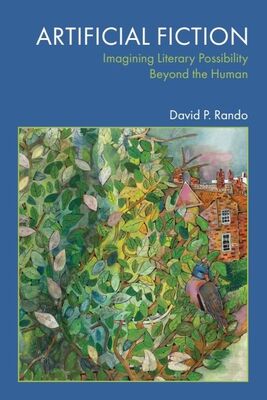
Artificial Fiction Imagining Literary Possibility Beyond the Human
David P. Rando
Artificial Fiction: Imagining Literary Possibility Beyond the Human dreams boldly about literary possibility in this moment of AI’s technological and social immaturity. Through the wishful image of artificial fiction, this book explores the potential of new realisms, new modernisms and new genres that present new epistemologies, new ontologies and new pleasures and experiences for readers. While helping us to recognise and reimagine human-centredness in literary theory and practice, this book also 'looks back' at human fiction as a genre to consider what is distinctive and valuable about it, demonstrating that human fiction and artificial fiction have roles to play in imagining and learning to respect lives and experiences of every variety.
-
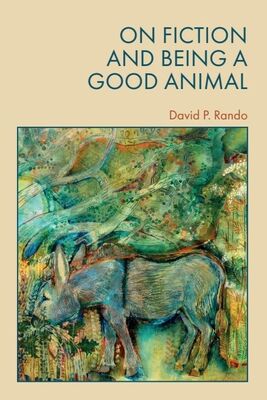
On Fiction and Being a Good Animal
David P. Rando
Argues that literature has a special role to play in developing a wishful, visionary, and utopian sensibility for living in a more-than-human world
- Suggests ways that fiction can provoke and amaze, inspire and frighten, delight and surprise readers into becoming better animals among nonhuman creatures and within the wider, nonhuman world
- Forges new connections between critical animal studies, critical social theory, and literary ethics
- Encourages readers to attend to the eccentricity of fiction by which we may discover the unseen presences of better worlds for human-nonhuman animal relationships
Instead of making readers into better people, what if fiction could help us to become better animals? On Fiction and Being a Good Animal argues that we should abandon the persistent humanist idea that fiction can produce better people. Instead, we should read and value fiction according to its ability to help us to envision being better animals. Inspired by Theodor W. Adorno, David Rando defines a good animal as one who does not live a life of domination. He argues that when readers approach fiction’s wishful images with non-anthropocentric expectations, we are rewarded by anthropocosmic visions of the world - ones in which humans are in and with the world but no longer at the centre of it. In compelling readings of Agustina Bazterrica, T. C. Boyle, Leonora Carrington, Marian Engel, Karen Joy Fowler, Franz Kafka, Doris Lessing, Clarice Lispector, Kenzaburo Oe, Olga Tokarczuk, and Jesmyn Ward, the book explores wishful images that pertain to the nonhuman and more-than-human worlds. Readers will discover in this fiction wishful images relating to irreconcilable minds and experiences, human-nonhuman family relationships, love and risk across race and species, and shared vulnerability, communion and pleasure. -
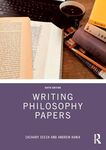
Writing Philosophy Papers, 6th Edition
Zachary Seech and Andrew Kania
This sixth edition of Writing Philosophy Papers updates and expands one of the most popular guides to philosophical writing assignments for undergraduate students. Written in a clear, straightforward style, the book covers everything from time management to the difference between “i.e.” and “e.g.”
The heart of the book is devoted to how to write a thesis-defense paper, with chapters on the structure of a strong paper, the process of writing and revising, matters of style and usage, and scholarly citation. This advice is illustrated with concrete examples throughout, including a complete thesis-defense paper written and formatted according to the book’s recommendations.
The book also covers how to take good notes from various kinds of philosophical sources, how to write other commonly assigned kinds of papers, and how to study for and take a philosophy exam. A chapter on doing philosophical research contains practical advice on how to discover and access the most helpful sources for a philosophical research paper or annotated bibliography. Because virtually every philosophy assignment requires a basic grasp of arguments, the book ends with a chapter introducing some basic concepts and skills for reasoning well.
The heart of the sixth edition has been revised and restructured to lead students even more clearly through the process of drafting, revising, and formatting a thesis-defense paper. This new edition also includes:
• an updated, completely revised, and expanded chapter on citing sources, giving equal consideration to print and online sources;
• an updated, completely revised, and expanded chapter on doing philosophical research, focused on how to find the most helpful sources for completing a philosophical research paper or annotated bibliography;
• updated, revised, and greatly expanded advice on writing style and usage;
• a completely revised and expanded treatment of good reasoning, with a new discussion of inductive and abductive reasoning; and
• new advice on how to take good notes and how to study for and take philosophy exams. -
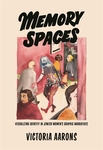
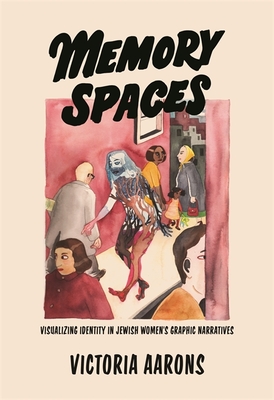
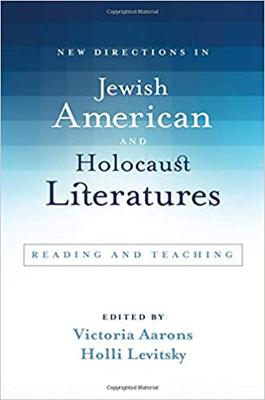
Memory Spaces: Visualizing Identity in Jewish Women's Graphic Narratives
Victoria Aarons
An exploration of the work of Jewish women graphic novelists and the intricate Jewish identity is complicated by gender, memory, generation, and place-that is, the emotional, geographical, and psychological spaces that women inhabit. Victoria Aarons argues that Jewish women graphic novelists are preoccupied with embodied memory: the way the body materializes memory. This monograph investigates how memory manifests in the drawn shape of the body as an expression of the weight of personal and collective histories. Aarons explores Jewish identity, diaspora, mourning, memory, and witness in the works of Sarah Lightman, Liana Finck, Anya Ulinich, Leela Corman, and more.
Memory Spaces begins by framing this research within contemporary discourse and reflects upon the choice to explore Jewish women graphic novelists specifically. In the chapters that follow, Aarons relates the nuanced issues of memory, transmission of trauma, Jewish cultural identity, and the gendered self to a series of meaningful and noteworthy graphic novels. Aarons's insight, close readings, and integration of contemporary scholarship are conveyed clearly and concisely, creating a work that both captivates readers and contributes to scholarly discourse in Jewish studies, women's literature, memory studies, and identity. -
Archivos: Antonio Fernandez Spencer
Carlos X. Ardavín Trabanco
Los Archivos de Literatura Dominicana ofrecen publicaciones monográficas sobre los principales autores del país dominicano. En esta edición tenemos al poeta y ensayista Antonio Fernández Spencer (1922-1995), una de los modernizadores de la lírica en esa media isla caribeña. La obra ha sido editada por Carlos X. Ardavín Trabanco, reconocido ensayista y académico de orígenes domínico-cubano, actualmente profesor en en la Universidad de Trinity, San Antonio, Tejas.
-
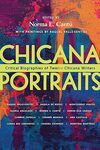
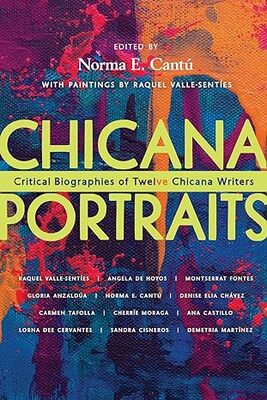
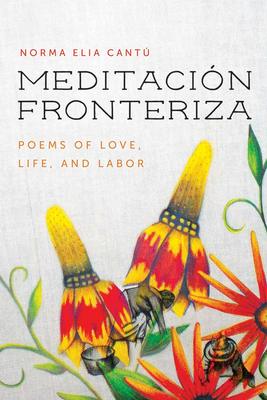
Chicana Portraits: Critical Biographies of Twelve Chicana Writers
Norma E. Cantu
This innovative collection pairs portraits with critical biographies of twelve key Chicana writers, offering an engaging look at their work, contributions to the field, and major achievements.
Artist Raquel Valle-Sentíes’s portraits bring visual dimension, while essays delve deeply into the authors’ lives for details that inform their literary, artistic, feminist, and political trajectories and sensibilities. The collection brilliantly intersects artistic visual and literary cultural productions, allowing complex themes to emerge, such as the fragility of life, sexism and misogyny, Chicana agency and forging one’s own path, the struggles of becoming a writer and battling self-doubt, economic instability, and political engagement and activism.
Arranged chronologically by birth order of the authors, the book can be read cover to cover for a genealogical overview, or scholars and general readers can easily jump in at any point and read about an individual author, regardless of the chronology.
Biographies included in this work include Raquel Valle-Sentíes, Angela de Hoyos, Montserrat Fontes, Gloria E. Anzaldúa, Norma E. Cantú, Denise Elia Chávez, Carmen Tafolla, Cherríe Moraga, Ana Castillo, Lorna Dee Cervantes, Sandra Cisneros, and Demetria Martínez. -
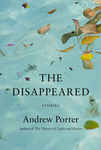
The Disappeared: Stories
Andrew Porter
A collection of stories that trace the threads of loss and displacement running through all our lives, by the acclaimed, award-winning author of The Theory of Light and Matter
A husband and wife hear a mysterious bump in the night. A father mourns the closeness he has lost with his son. A friendship with a married couple turns into a dangerous codependency. With gorgeous sensitivity, assurance, and a propulsive sense of menace, these stories center on disappearances both literal and figurative—lives and loves that are cut short, the vanishing of one's youthful self. From San Antonio to Austin, from the clamor of a crowded restaurant to the cigarette at a lonely kitchen table, Andrew Porter captures each of these relationships mid-flight, every individual life punctuated by loss and beauty and need. The Disappeared reaffirms the undeniable artistry of a contemporary master of the form.
-
Doing Animal Studies with Androids, Aliens, and Ghosts: Defamiliarizing Human-Nonhuman Animal Relationships in Fiction
David P. Rando
Exploring what can be learnt when literary critics in the field of animal studies temporarily direct attention away from representations of nonhuman animals in literature and towards liminal figures like androids, aliens and ghosts, this book examines the boundaries of humanness. Simultaneously, it encourages the reader both to see nonhuman animals afresh and to reimagine the terms of our relationships with them.
Examining imaginative texts by writers such as Octavia Butler, Philip K. Dick, Kazuo Ishiguro, Jeanette Winterson and J. M. Coetzee, this book looks at depictions of androids that redefine traditional humanist qualities such as hope and uniqueness. It examines alien visions that unmask the racist and heteronormative roots of speciesism. And it unpacks examples of ghosts and spirits who offer posthumous visions of having-been-human that decenter anthropocentrism. In doing so, it leaves open the potential for better relationships and futures with nonhuman animals. -
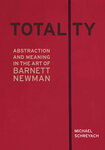
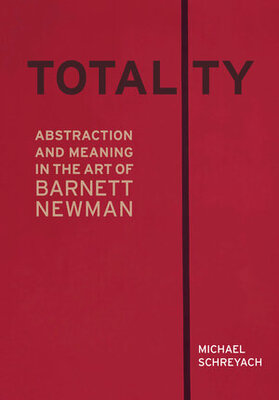
Totality: Abstraction and Meaning in the Art of Barnett Newman
Michael Schreyach
Totality offers a deeply researched and thoughtful account of the art of Barnett Newman (1905–1970). While Newman’s paintings are widely regarded as among the most significant statements of abstract expressionism—and emblematic of modernism at midcentury—they pose distinct challenges to formal description and historical evaluation. With this book, Michael Schreyach guides readers toward a transformed understanding of Newman’s profound body of work.
Through a sequence of close readings, Schreyach examines six key terms—symbol, surface, self-evidence, space, standpoint, and scale—that illuminate the meaning of Newman’s claims for the “metaphysical” content of his art. Totality progresses from the meticulous analysis of the technical structure and visual appearance of specific works to critical and archivally documented arguments about Newman’s intentions. The result is an altogether original interpretation of the artist’s enterprise, as surprising as it is nuanced. -
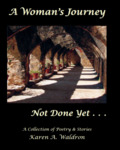
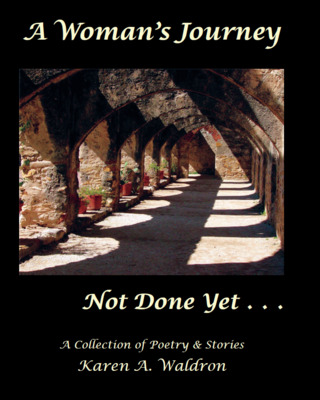
A Woman's Journey: Not Done Yet
Karen A. Waldron
This collection of poems, stories, travelogues and interviews presents women’s universally shared journeys, and encourages women to embrace risk, courage and social action, to move beyond complacency and restrictions imposed by stereotypic ageism, sexism, inequity, and discrimination. As teacher, scholar, and writer, Karen A. Waldron takes readers with her on travels across continents to reflect on the most challenging questions of our times, while exploring human connectedness and spirituality as a basis for embracing a sense of self-worth and purpose across all stages of life. She reminds us that despite age or personal circumstance, “Women are not done yet.”
-
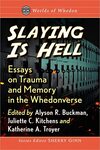
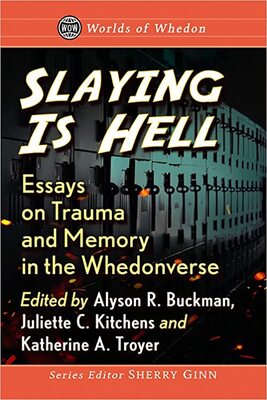
Slaying is Hell: Essays on Trauma and Memory in the Whedonverse
Alyson R. Buckman, Juliette C. Kitchens, and Katherine A. Troyer
The films, television shows, and graphic novel series that comprise the Whedonverse continually show that there is a high price to be paid for love, rebellion, heroism, anger, death, betrayal, friendship, and saving the world. This collection of essays reveals the ways in which the Whedonverse treats the trauma of ordinary life with similar gravitas as trauma created by the supernatural, illustrating how memories are lost, transformed, utilized, celebrated, revered, questioned, feared, and rebuffed within the storyworlds created by Joss Whedon and his collaborators. Through a variety of approaches and examinations, the essays in this book seek to understand how the themes of trauma, memory, and identity enrich one another in the Whedonverse and beyond. As the authors present different arguments and focus on various texts, the essays work to build a mosaic of the trauma found in beloved works like Buffy the Vampire Slayer, Angel, Dollhouse, and more. The book concludes with a meta-analysis that explores the allegations of various traumas made against Joss Whedon himself.
-
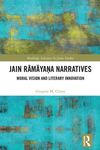
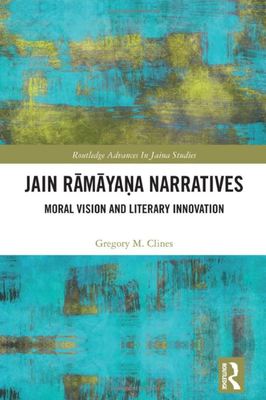
Jain Rāmāyaṇa Narratives: Moral Vision and Literary Innovation
Gregory M. Clines
Jain Rāmāyaṇa Narratives: Moral Vision and Literary Innovation traces how and why Jain authors at different points in history rewrote the story of Rāma and situates these texts within larger frameworks of South Asian religious history and literature.
The book argues that the plot, characters, and the very history of Jain Rāma composition itself served as a continual font of inspiration for authors to create and express novel visions of moral personhood. In making this argument, the book examines three versions of the Rāma story composed by two authors, separated in time and space by over 800 years and thousands of miles. The first is Raviṣeṇa, who composed the Sanskrit Padmapurāṇa (“The Deeds of Padma”), and the second is Brahma Jinadāsa, author of both a Sanskrit Padmapurāṇa and a vernacular (bhāṣā) version of the story titled Rām Rās (“The Story of Rām”). While the three compositions narrate the same basic story and work to shape ethical subjects, they do so in different ways and with different visions of what a moral person actually is. A close comparative reading focused on the differences between these three texts reveals the diverse visions of moral personhood held by Jains in premodernity and demonstrates the innovative narrative strategies authors utilized in order to actualize those visions.
The book is thus a valuable contribution to the fields of Jain studies and religion and literature in premodern South Asia.
-
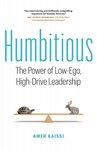
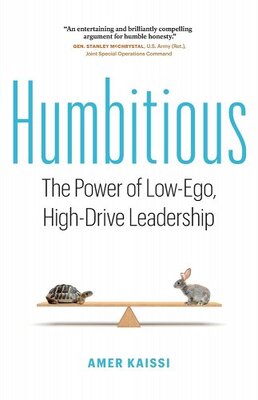
Humitious: The Power of Low-Ego, High-Drive Leadership
Amer Kaissi
Arrogant. Charismatic. Narcissistic If you were to name traits that define strong leaders, these are some of the words that likely spring to mind. Conventional thinking would have us believe that it’s those filled with hubris and free of self-doubt that make the best leaders. The evidence, however, tells quite a different story.
In Humbitious, professional speaker, executive coach and distinguished Trinity University professor Amer Kaissi shatters the common myths about leadership being an ego-driven game. Drawing on extensive research, personal stories, and fascinating historical examples of leadership done right (and wrong), Kaissi reveals why the most effective, high-performing leaders aren’t those with the biggest egos, but who possess humility, coupled with ambition and drive.
Tracing triumphs (and missteps) of leaders from Napoleon Bonaparte to New Zealand Prime Minister Jacinda Ardern, Apple co-founder Steve Jobs to disgraced Theranos founder Elizabeth Holmes, soccer star Alex Morgan to Costco CEO Jim Sinegal, and others, Kaissi illuminates what true humility is—and what it isn’t—and how to cultivate it within yourself and with others. As you gain insight into this critical leadership trait, you’ll come to understand that humility requires ambition, courage, and fierce determination. Humility, you’ll learn, isn’t about false modesty; it’s about being honest with yourself, and others, about your abilities and potential, so you can make a realistic plan for improvement.
The unequivocal truth is that the successful narcissists that you either know or are working for right now are the exception to the rule. The highest performers are those who adopt and integrate humility into their relationships with others, with their organizations, and with themselves. Because fortune favors not simply the bold—but the humbitious. -
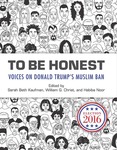
To Be Honest: Voices on Donald Trump's Muslim Ban
Sarah Beth Kaufman, William G. Christ, and Habiba Noor
To Be Honest is a play script and series of essays reflecting on the ways Muslims are perceived and spoken of in America. With funding from a Mellon Foundation grant, several professors conducted more than two hundred hours of qualitative interviews in Texas with people across religious and political spectrums. Their conversations confirm expected polarizations and reveal new, troubling perspectives.
To Be Honest is a “documentary theater” script born from these interviews, which were used to help create monologues that give a face to the nuanced complexity of what is rarely said aloud. The monologues touch on non-Muslim millennials’ understandings of Islam, racism’s intersection with Islamophobia, the fatigue of “activist” Muslims, the impact of intervention in the Middle East on U.S. military veterans, feminist readings of the hijab, the Trump presidency, and more.
Six essays contextualize the script’s underlying themes and provide material for further study. In these polarizing times, To Be Honest illuminates the striking reality that Americans have vastly different experiences with Islam, from evangelicals who work to convert Muslims with the aim of “helping them achieve peace” to Muslim youth who struggle to make sense of why society dissects their religion.
Students, scholars, readers, and theatergoers will come away with insights that allow them to move beyond limited views of Islam by listening to and engaging with others. To Be Honest is an important script for staging and a valuable tool for dialogue across ideological perspectives. -
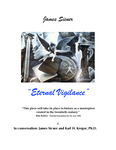
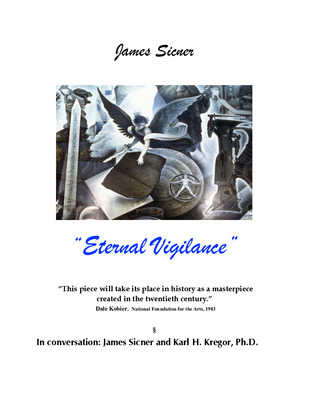
James Sicner's "Eternal Vigilance": An Illustrated Narrative to The World's Largest Photo-Collage Mural
Karl H. Kregor
In the Coates Library at Trinity University in San Antonio Texas, a remarkable work of art covers its central stairwell's outer and inner walls. It is the world’s largest photo-collage mural, encompassing c.1,400 square feet, and composed of hundreds of images, many of which are themselves composed of, and integrated with, other images. It was created by the artist, James Sicner.
This is a guide to that work. It is based on primary research conducted in 1991 and an examination of primary sources, texts, and illustrations located in Sicner’s home, conducted and transcribed two subsequent interviews with James’ sister Celeste Sicner-Hurd, and transcribed an on-air Trinity University “Library Hour” program James Sicner had with Irma Dee Everts, and Katherine Pettit, on January 30, 1980.
-
Mortal Objects: Identity and Persistence Through Life and Death
Steven Luper
How might we change ourselves without ending our existence? What could we become, if we had access to an advanced form of bioengineering that allowed us dramatically to alter our genome? Could we remain in existence after ceasing to be alive? What is it to be human? Might we still exist after changing ourselves into something that is not human? What is the significance of human extinction? Steven Luper addresses these questions and more in this thought-provoking study. He defends an animalist account, which says that we are organisms, but claims that we are also material objects. His book goes to the heart of the most complex questions about what we are and what we might become. Using case studies from the life sciences as well as thought experiments, Luper develops a new way of thinking about the nature of life and death, and whether and how human extinction matters.
-
Schopenhauer's The World as Will and Representation: A Critical Guide
Judith Norman and A Welchman
Schopenhauer's The World as Will and Representation is one of the central texts in the history of Western philosophy. It is one of the last monuments to the project of grand synthetic philosophical system-building, where a single, unified work could aim to clarify, resolve, and ground all the central questions of metaphysics, epistemology, ethics, religion, aesthetics and science. Poorly received at its initial publication, it soon became a powerful cultural force, inspiring not only philosophers but also artists, writers and musicians, and attracting a large popular audience of non-scholars. Perhaps equally importantly, Schopenhauer was one of the first European philosophers to take non-Western thought seriously and to treat it as a living tradition rather than as a mere object of study. This volume of new essays showcases the enormous variety of contemporary scholarship on this monumental text, as well as its enduring relevance.
-
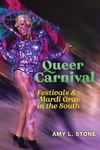
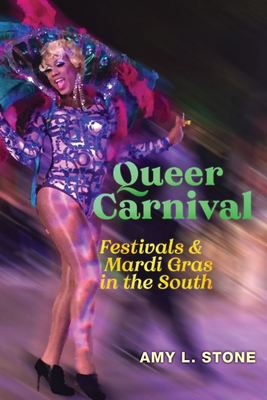
Queer Carnival: Festivals and Mardi Gras in the South
Amy L. Stone
Festivals like Mardi Gras and Fiesta have come to be annual events in which entire cities participate, and LGBTQ people are a visible part of these celebrations. In other words, the party is on, the party is queer, and everyone is invited. In Queer Carnival, Amy Stone takes us inside these colorful, eye-catching, and often raucous events, highlighting their importance to queer life in America’s urban South and Southwest.
Drawing on five years of research, and over a hundred days at LGBTQ events in cities such as San Antonio, Santa Fe, Baton Rouge, and Mobile, Stone gives readers a front-row seat to festivals, carnivals, and Mardi Gras celebrations, vividly bringing these queer cultural spaces and the people that create and participate in them to life. Stone shows how these events serve a larger fundamental purpose, helping LGBTQ people to cultivate a sense of belonging in cities that may be otherwise hostile.
Queer Carnival provides an important new perspective on queer life in the South and Southwest, showing us the ways that LGBTQ communities not only survive, but thrive, even in the most unexpected places. -
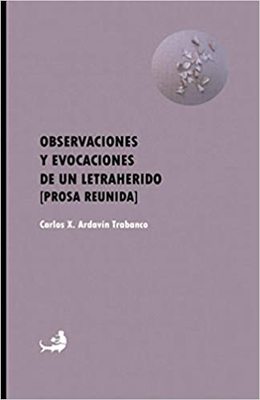
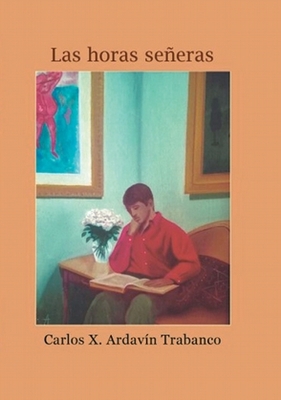
Observaciones y Evocaciones de un Letraherido : (Prosa Reunida)
Carlos X. Ardavín Trabanco
"Observaciones y evocaciones de un letraherido" reúne los cinco libros de prosa que Carlos X. Ardavín Trabanco publicó entre 2002 y 2016. Estos textos están vinculados por su común origen periodístico —excepto el último— y por la propuesta de elaborar el modesto archivo de un escritor herido por la memoria y la melancolía, marcado por la felicidad de los libros y el misterio de algunas ciudades.
-
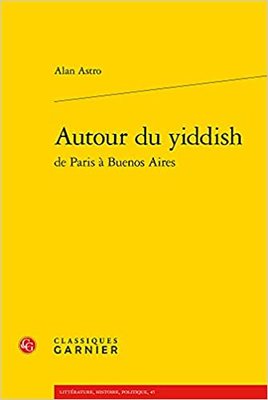
Autour du Yiddish de Paris à Buenos Aires
Alan Astro
Cet ouvrage se penche sur des oeuvres littéraires en yiddish produites en France et en Amérique latine avant, durant et après la Shoah et nous fait entendre des échos de cette langue juive chez des écrivains d'expression française et espagnole. Le lecteur rencontrera des oeuvres de fiction d'auteurs immigrés de Pologne à Paris, notamment Wolf Wieviorka et Oser Warszawski, des nouvelles de Mordechai Alpersohn chroniquant la vie des colonies agricoles juives d'Argentine ainsi que certains noms familiers : Guillaume Apollinaire, Jorge Luis Borges et Élie Wiesel, qui ont tous intégré des motifs yiddish dans leur imaginaire.
[This book examines literary works in Yiddish produced in France and Latin America before, during and after the Shoah and makes us hear echoes of this Jewish language among French and Spanish-speaking writers. The reader will encounter works of fiction by immigrant authors from Poland in Paris, including Wolf Wieviorka and Oser Warszawski, short stories by Mordechai Alpersohn chronicling the life of the Jewish agricultural settlements in Argentina as well as certain familiar names: Guillaume Apollinaire, Jorge Luis Borges and Élie Wiesel, who all incorporated Yiddish motifs into their imaginations.]
-
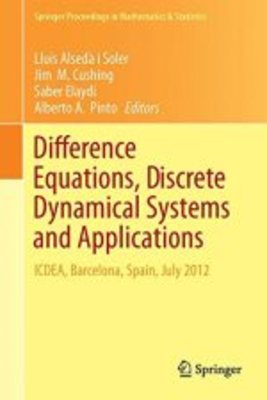
Progress on Difference Equations and Discrete Dynamical Systems: 25th ICDEA, London, UK, June 24–28, 2019
Steve Baigent, Martin Bohner, and Saber Elaydi
This book comprises selected papers of the 25th International Conference on Difference Equations and Applications, ICDEA 2019, held at UCL, London, UK, in June 2019. The volume details the latest research on difference equations and discrete dynamical systems, and their application to areas such as biology, economics, and the social sciences. Some chapters have a tutorial style and cover the history and more recent developments for a particular topic, such as chaos, bifurcation theory, monotone dynamics, and global stability. Other chapters cover the latest personal research contributions of the author(s) in their particular area of expertise and range from the more technical articles on abstract systems to those that discuss the application of difference equations to real-world problems. The book is of interest to both Ph.D. students and researchers alike who wish to keep abreast of the latest developments in difference equations and discrete dynamical systems.
-
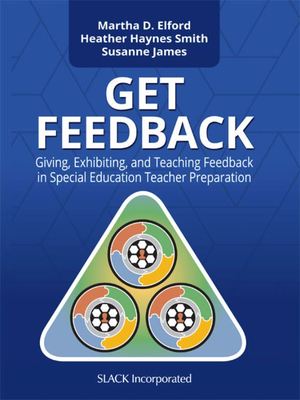
Get Feedback: Giving, Exhibiting, and Teaching Feedback in Special Education Teacher Preparation
Martha D. Elford, Heather Haynes Smith, and Susanne James
Perfect for special education teacher preparation faculty, coordinators, and administrators, GET Feedback: Giving, Exhibiting and Teaching Feedback in Special Education Teacher Preparation provides examples, activities, and support for integrating and aligning feedback instruction, demonstrating the importance of putting the adult learner, as the feedback recipient, at the center of every feedback opportunity. Written in an approachable, easy-to-read format, this text is the first book to specifically examine feedback for adult learners.
Drs. Martha D. Elford, Heather Haynes Smith, and Susanne James use the G.E.T. Model (give, exhibit, teach) to provide structure for feedback through four domains: specificity, immediacy, purposefulness, and constructiveness.
GET Feedback combines Adult Learning Theory with education research to provide a comprehensive, integrated framework to teach feedback in special education teacher preparation. This text will improve how special education teacher educators “GET” feedback across courses and programs. -
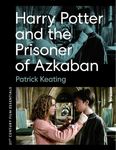
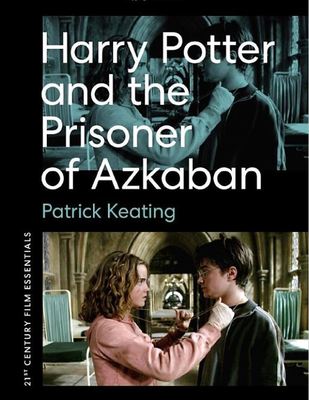
Harry Potter and the Prisoner of Azkaban
Patrick Keating
An essential work of twenty-first-century cinema, Alfonso Cuarón’s 2004 film Harry Potter and the Prisoner of Azkaban is an elegant exemplar of contemporary cinematic trends, including serial storytelling, the rise of the fantasy genre, digital filmmaking, and collaborative authorship. With craft, wonder, and wit, the film captures the most engaging elements of the novel while artfully translating its literary point of view into cinematic terms that expand on the world established in the book series and previous films.
In this book, Patrick Keating examines how Cuarón and his collaborators employ cinematography, production design, music, performance, costume, dialogue, and more to create the richly textured world of Harry Potter―a world filtered principally through Harry’s perspective, characterized by gaps, uncertainties, and surprises. Rather than upholding the vision of a single auteur, Keating celebrates Cuarón’s direction as a collaborative achievement that resulted in a family blockbuster layered with thematic insights.
-
La mirada opuesta: Voces de victimarios en la literatura latinoamericana contemporánea
Ana María Mutis and M. R. Jácome
La presente colección de ensayos ofrece un examen interdisciplinario del discurso del victimario en la literatura latinoamericana contemporánea con el propósito de aportar una nueva visión crítica y teórica de la violencia y de su representación textual en la región. Mediante el análisis de las voces de los victimarios en diversos discursos textuales y visuales que plasman la violencia en diferentes contextos históricos, políticos y sociales, esta colección expande y enriquece el estudio de la construcción de la memoria histórica del continente al ofrecer una perspectiva más integral a través de sus culturas.
This collection of essays offers an interdisciplinary examination of the perpetrator's discourse in contemporary Latin American literature with the aim of providing a new critical and theoretical vision of violence and its textual representation in the region. Through the analysis of the voices of the perpetrators in various textual and visual discourses that capture violence in different historical, political and social contexts, this collection expands and enriches the study of the construction of the historical memory of the continent by offering a more comprehensive perspective. across their cultures.
-
Hope, Form, and Future in the Work of James Joyce
David P. Rando
Hope and future are not the terms with which James Joyce has usually been read, but this book paints a picture of Joyce's fiction in which hope and future assume the primary colo(u)rs.
Rando explores how Joyce's texts, as early as Dubliners and A Portrait of the Artist as a Young Man, delineate a complex hope that is oriented toward the future with restlessness, dissatisfaction, and invention. He examines how Joyce envisions alternatives to the prevailing conventions of hope throughout his works and, in Ulysses and Finnegans Wake, develops formal techniques of spatializing hope to contemplate it from all sides.
Casting fresh light on the ways in which hope animates key aspects of Joyce's approach to literary content and form, Rando moves beyond the limitations of negative critique and literary historicism to present a Joyce who thinks agilely about the future, politics, and possibility.
Printing is not supported at the primary Gallery Thumbnail page. Please first navigate to a specific Image before printing.